(This description is grabbed directly from @married-to-the-night’s blog)
for short. It means “both sides”, in line with cis (“on this side”) and trans (“across”). It is a modifier, and NOT a gender.
It is a word for people who genuinely experience aspects of both trans and cis experiences, but do not fit either label: female-aligned alters in dfab DID/OSDD systems whose system has medically transitioned to male and male-aligned alters in the reverse situation. I am also open to it being used by individuals that have hormonal conditions that cause them to produce far too much of the “wrong” sex hormone, causing them to develop secondary sex characteristics, if said condition has done so. If you have another situation that I have not mentioned, feel free to ask, because I cannot list every applicable scenario.
Dibellic – A gender that is beautiful or strives to be beautiful to others with other worldly and deific energies. Based of the Aedra Dibella from the Elder Scrolls Series.
first flag is for vipulorgender, second is for vipulorboy, third vipulorgirl, fourth vipuloragender, and fifth vipulornonbinary. flags are based on the north american coral snake.
term coined and flags made by me at the request of an anonymous user
Solaric is flag 1 (orange stripe); Solduric is flag 2 (purple stripe).Soldaric: a trans woman who is attracted to other trans people (of any gender – nonbinary people included).
Solduric: a trans man who is attracted to other trans people (of any gender – nonbinary people included).
Colour meanings: Orange: close to pink, stereotypical “female” colour Purple: close to blue, stereotypicl “male” colour White: attraction to nonbinary people Yellow: attraction to women, lunarics & women-aligned people
Grey: represents the ‘grey-ness’, ambiguity, of gender & sexual orientation Green: attraction to men, solarics & men-aligned people
Black: attraction to unaligned nonbinary people & agender people
The names come from the word soldarity, meaning unity.
Not that I’ve posted any of my previous flags to tumblr myself…
These flags are for Lunarics, Solarics, Stellarics, and Mercurics,
Lunaric, the flag in the top left with the purple. Lunaric refers to sole attraction to fem-aligned enbies, feminine enbies, lunarians, and nebularians, but not women.
Solaric, the flag in the top right with the orange. Solaric refers to the sole attraction to masc-aligned enbies, masculine enbies, solarians, and novarians, but not men.
Stellaric, the flag in the bottom left with the green. Stellaric refers to the sole attraction to non-aligned enbies and stellarians.
Mercuric, the flag in the bottom right with the pink. Mercuric refers to the sole attraction to men, women, fem-aligned enbies, masc-aligned enbies, solarians, lunarians, novarians, and nebularians. Basically anyone but non-aligned or stellarian people.
These terms, as far as I’m aware, were coined by @socialjusticeichigo, not me.
These are meant to be alternative/minor editted flags for Neptunic and Uranic that have pictures of the planets on them, similar to alt flags that Venusic, Marsic, and Terraric have! The original flags are by @socialjusticeichigo (see here), I simply added the planets on top. Uranus is a planet that spins on its side, which is why the lines on the planet for the Uranic flag are vertical rather than horizontal.
Note that the original flags (without the planets) are meant to be the main flags for these terms as per the creator’s wishes. So please see my edits as minor alternatives at best, not replacements!
So first big post of this blog! I wanted to make some alternate flags to some of the galactic alignment terms, just so they fit better with the others! (Solarian, lunarian, etc) And one extra new term (or at least I think it’ll be new? I haven’t seen anyone suggest anything similar, so here goes)
Top row left to right: Duskian, Dawnian, and
Celestian.
Bottom row: Left is Singularian, and admittedly since it’s about rejection of alignment, maybe it’s better that it’s not similar to the others? But I figure I could make this anyways for those who may like it.
The one on the bottom right is the flag for a term I want to suggest. Cometian, intended for those whose alignment is fluid. I know that some people have discussed that the combo alignments (Galaxian, Novarian, etc) can also be fluid, but I figured it would be good to have a term specifically for alignment fluidity. You can use it as a prefix too, such as comet-novarian (i.e. someone whose alignment is fluid between stellarian and solarian)!
I picked comet for it since comets move all around the galaxy, more noticeably than other space bodies! The symbol is also the astronomical symbol for comets.
Also, I tried to pick okay colors for these flags, but please feel free to adjust them as needed!
gxrlby. gxrlenby, femxlenby, or womxnby: enby gxrl/wxmxn/fxmxle; a gender that is both girlby/womanby/womenby/femalenby (nonbinary/abinary girl/woman/female) and agender/no gender.
A gender based on or related to angels. This gender is pure with themes of innocence and yearning for heaven. This gender may also be influenced by someone’s kins
deathrunnerian : a gender related to being a runner in the mini game ‘death run’ located on the online minecraft server, The Hive.
—≻ flag/term made for anon by me !! ☆
ID : two flags side by side ; on the right a six horizontal striped flag with colors in this order, top to bottom : green, white, blue, purple, yellow, and red! on the left is the that same flag with The Hive’s Minigames logo in the middle!
So, given our recent contemplation over how we feel about the prefix “pan” in pangender, we did more reflecting and the pangender folks using this account decided to try coming up with a term that better suits them, remaining true to the pangender feeling but without the “pan = all = inadvertently includes POC-specific genders” issue.
The result: “metagender.”
Upon Googling we discovered that, though we’d never heard of it before, the term has been used (if rarely) to describe genderqueerness, lumped in with things like pangender, polygender, agender, gender neutral, et cetera. From what I can gather, our use of it is accurate.
So, yeah. For anyone else who feels pangender but finds the “pan = all” thing problematic, I suggest metagender.
It can be conjugated both ways. @mogaimomcoined them. What sounds more natural to you. I personally use singularly more, just as ey/em (Spivak pronouns).
[Image description: 7 stripes in a gradient going from black to yellow to black. End ID.]
Postorientation/Istero-: Like postgender, postorientation is a feeling that one’s identity is shaped by an orientation that one no longer experiences. From the Greek υστερο, meaning post- or after.
Isteroaesthetic
[Image description: 7 stripes in a gradient going from pink to yellow to pink. End ID.]
Isteroalterous
[Image description: 7 stripes in a gradient going from blue to yellow to blue. End ID.]
Isteroromantic
[Image description: 7 stripes in a gradient going from green to yellow to green. End ID.]
Isteroplatonic
[Image description: 7 stripes in a gradient going from dark yellow to yellow to dark yellow. End ID.]
Isteroquasiplatonic
[Image description: 7 stripes in a gradient going from yellow to pink to yellow to pink. End ID.]
Isterosensual
[Image description: 7 stripes in a gradient going from dark orange to yellow to dark orange. End ID.]
Isterosexual
[Image description: 7 stripes in a gradient going from purple to yellow to purple. End ID.]
[flag id: two flags of gradient dark blue to off-white blue. left is 7 stripes, right is 5 stripes. end id]
Caliean / Caligender
a gender that’s caused by or influenced by the blurring of systemhood. :: a gender thats blurry, fuzzy, and hard to define. some can maybe pin point it, or somewhat but its still blurry. can be, or become, unpleasant or even frustrating.
color meaning: Blue and greys are very blurry feeling. Fuzzy and almost empty at times. : open spaces : expansiveness
[Image description: A blue banner with black text reading: Do No Interact: Anti-anti / proshipper, transmed / truscum / TERF / gender critical, anti-MOGAI, anti endogenic systems, exclusionist, anti bi/pan/mspec lesbian or allow any of these. End ID]
A gender connected to Wind Archer’s Zephyr Of Life costume. Could be a kin or introtive gender, but not always. A gender that feels like a blessing.
Cookiedroidgender : A gender connected to Cookiedroid. Could be a kin or introtive gender, but not always. A gender that feels explorative and curious.
Gendercubus: a gender simply shaped like a cube. It is rather plain, and isn’t connected to much other than cubes. Etymology: Latin, “cubus” meaning “cube”
Isogender Manhood: a man that is neither cis man nor trans man; a manhood that is in between, beyond or removed from the cisgender/transgender dichotomy; a guy/boy that is cisn’t and transn’t simultaneously.
Femvir (femgendervir), virfem(me), femivir (femigendervir), feminivir (feminigendervir) or femmevir (femmegendervir): the combination of femgender (femmegender, feminigender or femigender) and gendervir; a male(-aligned) non-binary gender that is feminine in nature; a gender that is femme and male; a male-aligned gender femininity.
Isogender Womanhood: a woman that is neither cis woman nor trans woman; a womanhood that is in between, beyond or removed from the cisgender/transgender dichotomy; a gal/girl that is cisn’t and transn’t simultaneously.
Isogender Manhood: a man that is neither cis man nor trans man; a manhood that is in between, beyond or removed from the cisgender/transgender dichotomy; a guy/boy that is cisn’t and transn’t simultaneously.
Femvir (femgendervir), virfem(me), femivir (femigendervir), feminivir (feminigendervir) or femmevir (femmegendervir): the combination of femgender (femmegender, feminigender or femigender) and gendervir; a male(-aligned) non-binary gender that is feminine in nature; a gender that is femme and male; a male-aligned gender femininity.
Femlier, femera (femgenderera), femiera, feminiera, femmera, femmelier, erafem(me) or femilier: the combination of femgender and genderera (genderfemina, genderpuella or genderlier); a female(-aligned) non-binary gender that is feminine in nature; a gender that is femme and female; a female-aligned gender femininity.
Mascera (mascgenderera), manuera (manugenderera), eramasc(uline), ulinera, manulier, masclier, masculier, mascuera, masculiera, masculinera, mascpuella, mascupuella, mascfemina, mascufemina or manufemina: the combination of mascgender (mascugender, manugender or masculigender) and gendera (genderera, gendrera or gendrelier); a female(-aligned) non-binary gender that is masculine in nature; a gender that is both masc and female; a female-aligned gender masculinity.
Mascvir (mascgendervir), mascuvir, masculivir, manuvir, virmasc(uline), viruline or ulinevir: the mix of gendervir and mascgender; a male(-aligned) non-binary gender that is masculine in nature; a gender that is both male and masculine; a male-aligned gender masculinity.
Panavire (pangenderavire): identifying as every femache-adjacent, femache-aligned, and femache gender within one’s culture and experiences; being both panera and panvir.
“femache” can be replaced with ambinary, androgyne or other lia-spec identities. Alt. names: panvirmina (pangendervirmina), panpuerella/panpurella, panangi (panandrogyne), pangendravire, panambinary, omniavire/omnavire (oniavire/onavire, onambinary/omnambinary, omniambinary/oniambinary, omniangi/omnangi, onangi/oniangi, omnipuerella/omnipurella, onipurella/onipuerella, omnivirmina/onivirmina, omnifemache/onifemache), panfemache. -Ap
Gendravire, gendervirmina, gendereravir/gendreravir, genderpuerella/genderpurella, genderevira/gendrevira or gendrangi/genderangi: an umbrella term for all femache-adjacent, femache-aligned, and femache-identified genders. Can be also a personal identity.
Femache is the combination of both male and female genders (liagenders). Gendervira means the same as genderera, although it sounds like a combination of both gendervir and genderera. -Ap
Transpronomial (transpronoun): using pronoun(s) different from your assigned pronoun at birth; pronouns that do not align with or are uncommon for one’s AGAB (assigned gender at birth); not using one’s assigned pronoun; someone who is not cispronominal (cispronomial/cispronoun).
And since I once used this as a synonym of cross-pronouning, I suggest enantiopronoun (enantiopronominal/enantiopronomial) as an alternative and specific term.
Just as not all trans people consider themselves gender nonconforming (GNC), the same can happen with transpronominal people with PNC, for example, a she/her binary unipronomial trans woman and a he/him unipronominal binary trans man. -Ap
Transmascgxrlflux or transmascgxlflux: a transmasculine gxrlflux; the mixture of mascgxrl (tombxy, azurgxrl or tomgxrl), genderflux, transmasc, girlflux/galflux (womanflux), mascgirlflux/mascgxrlflux (mascgalflux/mascgxlflux, tomboyflux/tombxyflux, azurgirlflux/azurgxrlflux or tomgxrlflux/tomgirlflux), trans/mxsc(uline), agender, gxrl/gxl, mascflux/mxscflux, transflux and azurgirl (tomboy/tomgirl/mascgirl/mascgal).
a gender related to the fae, the earth, magic, and a masculine element. as much as it feels connected to the earth, magic and the fae, it feels connected to masculinity as a concept, as though masculinity is a thing just as natural as the earth. not necessarily masculine aligned or male aligned, just connected to masculinity. For fae alternumans only.
the creator of this flag (@polyjitter on twitter) doesn’t have a tumblr so they gave me permission to repost! enbyhet flag for any nonbinary person who considers their attraction straight
A tangential or tenuous connection to the concept of gender. Existing in that sort of floaty space where there is no gender, but still connecting with another label. Identifying with as opposed to identifying as.
Can be narrowed down and specified as one sees fit. Eg, Metawoman, Metaman, Metaqueer, etc.
Hey… so I know I’ve been pretty absent lately (you can thank school stress and family stuff for that), but I figure if I’m coming back I might as well come back with some flags I made!
I’m frayromantic and I got really annoyed at the lack of specific fray- flags. So I took matters into my own hands and made my own! From left to right, top to bottom, we have frayalterous, frayplatonic, frayqueerplatonic, frayromantic, fraysensual, and fraysexual!
Fray-: When someone only experiences attraction to individuals they are less familiar with, and lose interest when they get to know the person. Also known as ignota-.
Coined by: Blog deleted (was edensmachine) Original flag by: @pridearchive Flags by: Mod Audi
Neutrofluid/Queerfluid – a gender identity falling under genderfluid category, it’s a gender identity that only travels between nonbinary genders, never binary male/female
green – nonbinary tied to binary spectrum white – lack of/all genders yellow – nonbinary outside the binary spectrum greyish blue – demi genders purple – multiple genders identity
(i accidentially sent it to beyond mogai page which has submissions closed so i hope here its fine, i wanted to share this gender term i made since i couldn’t find anything that matched my gender identity :_:)
Presentationfluid (gender expressionfluid, expressivefluid, abroexpressing, abropresenting or abroexpressive): having a genderfluid expression/abrogender presentation; changing/fluctuating the way you present.
This is absolutely true and I’m never gonna not be mad about it. For anyone who wants more details: in the United States, single, widowed, and divorced women were legally required to have a man present to sign for a new line of credit at a bank until 1975.
A woman born in 1975 will celebrate her 46th birthday this year.
And no-fault divorce wasn’t legalized until 1970. Before that, if your marriage wasn’t working out, too bad. If you or your children were being abused, you’d have to prove it to escape the marriage.
I couldn’t find any, so here’s a genderfluid man moodboard. For demifluid trans dudes, genderfaun people who describe themselves as men, genderfluid people who are often or usually boys, and just any genderfluid dudes! Anyone who uses feels this identity sometimes is welcome to use the flag. I would appreciate credit if you use it, but don’t require it, just don’t pretend you made it or anything.
[Image description: a flag with five stripes. The top stripe is light orange and the bottom stripe is a lighter purple color. The three middle stripes are two dark blue-purplish stripes around a central light, bright blue stripe. End description.]
Bodyflux: feeling like your sense of embodiment fluxuates between weak and strong; sort of related to dissociation, but not actually dissociation. can describe frequent and inexplicable out-of-body sensations.
Bodyfluid: feeling like your relationship to your physical gendered body changes from day to day/moment to moment/etc.
Transbodied: a term to describe being at the weird and difficult intersection between gender, sex, spiritual identity, and mental illness (sensory disorder, BIID, dissociation, etc.), while understanding that your mind and body don’t match up in some way that isn’t straightforwardly related to gender dysphoria, wistphoria, or transition
Stellar-aligned was coined by Tumblr user the-gender-collector-emself on July 23, 2020.
Stellar-aligned is described as “A large, hot, and bright alignment with a fixed course through space. May be loud or boisterous. Associated with light and solar eclipses.”
Quantum-aligned was coined by Tumblr user the-gender-collector-emself on July 23, 2020.
Quantum-aligned is described as “A paradoxical alignment that is both known and unknown, present and absent. May be complex or simple, and may overlap with many other alignments or none at all.”
Berkoric is described as “Berkoric is a gender based around the aesthetic and feeling of the source Berserk. […]So um it kinda turned into: Berkoric is a gender best defined by the universe in the franchise Berserk. It may be a direct connection to the franchise, the characters within it, or the aesthetic itself. One can also use Berkoric as a kingender but is not exclusively so. […]
For me the gender I’m trying to explain with this word is aaa how I experience gender is so weird to actually say outloud but uh mud, muddy, dirty, blood, like a battleground. Stress, anxieties, covered in armor. Scarred, stalked. Dark, with bits of golden bronze. Bone. Moon light. Smell of smoke, gunpowder, decay.
Rdrsexual/romantic/etc.- an orientation related to the video game Red Dead Redemption. Can include attraction to fictional characters inside the franchise.
(Image description: two images with the words “queer is beautiful” repeating on a white background, one image has text in the shades of purple of the queer chevron flag and the other has purple and green text in the shades of the genderqueer flag.)
Here is a screenshot of a message I received earlier.
I never said that being kinky is gay. Obviously, kinky people come in all romantic and sexual orientations, in fluid identities and in identities not named yet.
What I said is that the kink and LGBTQIA+ communities overlap and that our histories overlap. Our present and our futures overlap.
The leather pride flag was created by a gay leatherman, Tony DeBlase, and first displayed in May 1989. He was inspired by the rainbow flag and decided to create a symbol for the leather community to unite around. (Source)
In June 1989, the leather pride flag appeared at a Pride event for the first time, in Portland, OR.
Since then, the leather pride flag has appeared at pride events around the world. A few examples:
The San Francisco Gay Leatherwalk on Castro Street, September 1996. (Source)
Twin Cities GLBT Pride Parade, Minnesota, June 28, 1998 (Link)
There are dozens more images just like these, one simple web search away.
Visibility as a kinky LGBTQIA+ person has always been a form of resistance against shame, assimilation, and respectability politics. It’s loud, proud, in your face, won’t be silenced or erased. It’s a way of pushing back against a queerphobic society which often desexualizes LGBTQIA+ people and promotes the belief that heterosexual sex is the only real kind of sex.
Kinky LGBTQIA+ people are still real and vaild LGBTQIA+ people. They’re just as deserving of inclusion and representation in our spaces as anyone else.
Yup! The leather pride flag is the SECOND-OLDEST pride flag – only the rainbow predates it. The design was first unveiled at International Mr. Leather in Chicago, which is a very very very GAY event that has been running since 1979 and is one of the largest regular LGBTQ leather events in the world. The Leather Archives & Museum in Chicago has a huge collection of documents and exhibits related to it. (The LA&M founder, Chuck Renslow, was, of course, gay.) If you’re ever in Chicago I HIGHLY recommend a visit, it’s fascinating and inspiring and the people are very nice.
Most of the first open BDSM events were run by and for LGBTQ people. The first real BDSM how-to guide, The Leatherman’s Handbook (1972) by Larry Townsend, was written by a gay man for a gay male audience.
No, being kinky does not make straight people LGBTQ. But the overwhelming majority of people who have used this flag in the past and continue to use it now ARE NOT STRAIGHT.
(I mean, what do you think that leather dude in the Village People was about? That was already an iconic gay image in the 1970s!)
Claiming the leather flag doesn’t deserve a place among all the other pride flags is pure respectability politics. It’s an ahistorical lie that serves no other purpose.
I will never understand these people who keep trying to Discourse leather pride out of existence, but whose only understanding of what they universally call “kink” is lukewarm radfem nonsense that assumes heterosexuality
the creator of this flag (@polyjitter on twitter) doesn’t have a tumblr so they gave me permission to repost! enbyhet flag for any nonbinary person who considers their attraction straight
Ph4ntomzgender! A gender that is described as “A non binary/agender yet masc alligned gender, but feels masculine in the way a feminine blue is ‘masculine’, changes like some stringy glob monster, feels like a demonic eldritch beast, royal in the ‘bad bitch’ sense, and can melt into another gender sometimes. It can also sometimes feel like a person.” (Paraphrased)
Bodyflux: feeling like your sense of embodiment fluxuates between weak and strong; sort of related to dissociation, but not actually dissociation. can describe frequent and inexplicable out-of-body sensations.
aceflux: similar to genderflux in that the level of sexual attraction you feel tends to flux in and out in intensity. some days you may feel sexual attraction, then others you might feel entirely no sexual attraction, and some days you’re just in between.
aroflux: similar to genderflux in that the level of romantic attraction you feel tends to flux in and out in intensity. some days you may feel romantic attraction, then others you might feel entirely no romantic attraction, and some days you’re just in between.
definition: for deadkin and beings with depersonalization/derealization only; not so much the absence of a gender, but since you’re dead gender doesn’t matter
Final Fantasy 7 Umbrella / FFVIIGender : Genders connected to the world of or characters in the Final Fantasy 7 universe. Can feel connected to the lifestream. Could be kin or introtive, but doesn’t have to be.
Aerigender : A gender that’s floral, ancient, mystical, earthy, joyful, and maybe holy. Connected to Aerith Gainsborough in the Final Fantasy 7 universe. May feel feminine. Could be kin or introtive, but doesn’t have to be.
—
To be honest, we got distracted before we could make any more but felt they shouldn’t stay in drafts anymore.
In a short definition an Allucinagender is a gender of which the individual who possesses it does not feel comfortable acknowledging it as a primary part of their identity or in everyday life due to it feeling fictional, dream-like and/or unreal.
Allucinagender may be standalone or one of multiple, there are no restrictions. It’s where the gender that one possesses feels unreal, the individual who has an Allucinagender may feel uncomfortable with this gender and avoid openly presenting as such unless in situations where they do not have to openly state that it is their gender or a reality of theirs (roleplay, hypothetical sentences, drag, etc.). The individual may feel more comfortable going by another gender and ignoring the allucinagender entirely otherwise.
Alternatively, the individual may much more enjoy certain aspects of the gender, however, as it feels false, dream-like or unreal to a certain degree it would feel like a lie to take it on entirely, so they may define it in some way or another while not accentuating it as their main or a primary gender experience.(Ex. A nanogendered person using the nanogender label to identify their Allucinagender, however primarily identifying in another way).
An idea for a trans flag redesign, based on transfem/transmasc flags by @deadly-delilah, also using readjusted solarian/lunarian colors, remaining the white stripe representing abinary, non-binary and intergender identities/people.
Pro/Juxavire (ju/proxeravir, pro/juxeravir or ju/proxavire): a gender relative to male and female, but is something separate and entirely on it’s own; multigender of juxera and proxvir.
Since projuxevira was more femache gender-relative, projuxavirity isn’t essentially a simultaneous relativity. See also: nixavire and inavire.
:
Bisexuals in f/m relationships are still 100% queer
Pansexuals in f/m relationships are still 100% queer
Polysexuals in f/m relationships are still 100% queer
Omnisexuals in f/m relationships are still 100% queer
Asexuals in f/m relationships are still 100% queer
Aromantics in f/m relationships are still 100% queer
Transpeople in f/m relationships are still 100% queer
Your queerness doesn’t depend on your relationship!!
Menbie/menby or manby/manbie: an AMAB non-binary person; a binaryn’t man; or a DMAB nonbinary man.
“Menbies” is commonly used to talk about CAMAB enbies, implicitly implying they are all men (but the M- could be from MAAB (masculine or male assigned at birth)). Similar to enboy but not necessarily boy and to theyMAB but not essentially they/them user. It’s used negatively sometimes, so I’m reclaiming it.
Using girlmenby flag colors. [ID: four stripes of yellow, white, blue and dark blue. End ID.] -Ap
okay you know what? shoutout to trans people who arent gender experts
shoutout to trans people who dont really understand nonbinary identities other than their own (provided they still respect people whose identities they dont understand)
shoutout to trans people who dont really understand their own identities
shoutout to trans people who can’t explain why they use a certain label or how it makes sense, and only know that it fits
shoutout to nondysphoric people who don’t know why they’re trans but know that they are. shoutout to dysphoric people who don’t think it’s the dysphoria that makes them trans, but don’t know what does
shoutout to nonbinary people who don’t have a “more than two genders” explanation handy, to nonbinary people who freeze up when they face unexpected exorsexism because they haven’t memorised the scientific explanation for why they exist
shoutout to trans people who arent aware of many famous/popular trans influencers or celebrities
shoutout to trans people who know nothing about transition-related medical procedures except the ones they already plan to go through, have gone through, or are going through
shoutout to trans people who can’t explain trans history off the top of their head
shoutout to trans women who don’t know why they’re women, and trans men who don’t know why they’re men, but they know that they are
you don’t need to justify your exitance to anyone.
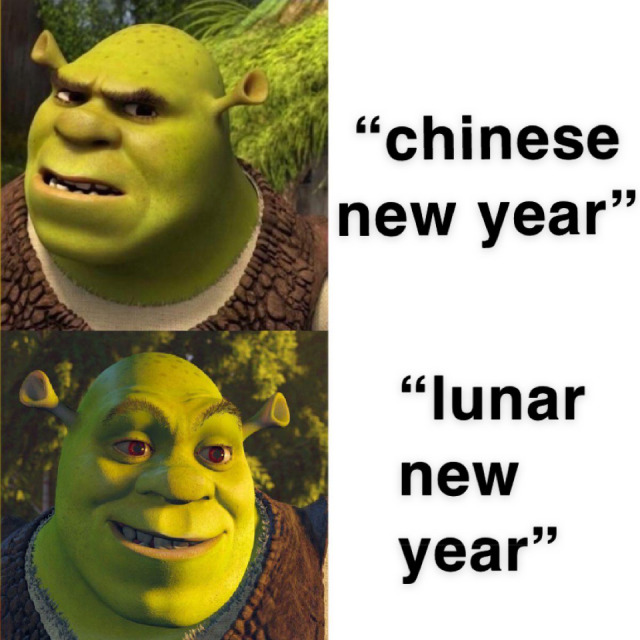
a friendly reminder from your local korean blogger that “lunar new year” is inclusive of the many cultures who celebrate, and “chinese new year” should be used only if you’re referring to specifically chinese cultural practices of the new year. thank you!!!
people in the notes have raised concerns that the term “lunar new year” erases jewish practices of rosh hashanah or islamic practices of hijri new year. i did not invent the term “lunar new year” and can only say that it’s the general, common term used to refer to the (mostly east) asian new year celebrations that occur in late january or early february. i welcome muslim or jewish folks to speak on whether or not the term feels exclusive to them, but as the original post implies, the point of the meme is to stop white people from perpetuating the idea that all asian culture is chinese.
Non-Jews clowning in the notes trying to white knight yourselves about Rosh Hashanah: shut up
Lunar New Year is a perfectly acceptable and accurate term for Asian New Year celebrations. Lunar New Year is used to refer to East Asian celebrations which fall on the first new moon of the Lunar calendar.
The Hebrew Calendar is lunar, correct. But our New Year – Rosh Hashanah – falls on 1st Tishrei (around September/October on the Gregorian calendar) and is celebrated as the anniversary of the creation of Adam and Eve in the garden of Eden.
While our New Year is technically a Lunar New Year in so far as it’s “a New Year celebrated on the Lunar Calendar”, I can guarantee you that when you say Lunar New Year, there is not a single Jew that thinks you’re talking about Rosh Hashanah.
Stop trying to use me as a weapon against asian folks. I see you and I’m mad about it.
Just gonna tack onto Ash’s wonderful addition that you should stop using Muslims to be racist against Asians, too.
Muslims refer to our lunar calendar as the Hijri calendar. We have never referred to it as a lunar calendar. And we refer to our new year as the Hijri New Year.
Asians using the term “lunar new year” does not erase us or invalidate us either because that’s simply a term we (Muslims) do not use!
As previously stated, “lunar new year” is predominantly used by Asians so to deny them that would be to invalidate them and their traditions.
Here is the deal: No one knows the exact truth about Sappho. What we have is fragments of poems and some very flattering words from the Alexandrians. Besides having a ballpark of when she lived (600’s BC) and where (Lesbos), we know almost nothing about her.
But that’s really not the point.
Sappho wrote lyrical and romantic poetry about men and women because it was her job. She got PAID for this, presumably. We don’t know how she really felt about any of it. It certainly seems like she cared about the people she wrote about, and maybe she did. Or maybe she was just a really good writer.
Our culture is full of generalizations about history and historical figures. But it is only when Sappho is claimed as bisexual that people wring their hands about how we don’t know for sure. Applying any label to a historical figure is technically dicey, but it is only the bi ones that have to prove it 100% beyond a shadow of a doubt. The word lesbian, used to refer to women who are attracted to women, didn’t even exist in her time, but you don’t see people interrogating lesbians over historical inaccuracy.
Longer Answer with Historical Context (or, Ellie finally gets some use out of her Classical Studies degree):
The context of Sappho’s relationships with women is kind of complicated. Sappho ran a thiasos, a sort of informal finishing school for young unmarried women. Upper-class families would send their daughters to these academies for instruction in proper feminine behaviors, as well as music and poetry recital, before they transitioned into married life (Krstovic). Aphrodite, the goddess of love, was the patron deity of the thiasos, and Sappho frequently used symbols of Aphrodite – flowers and garlands, perfumes, incense, and outdoor scenery – as part of her love poetry to the young women under her tutelage (“Sapphos”). Many of Sappho’s poems were actually marriage songs for these girls when they left to marry men.
Sappho’s thiasos may be considered the female counterpart to the male education system. In the Athenian Greek world, it was common for older men to take a younger boyfriend, and this was an important part of training the boy for his adult public life , providing him with connections he would need to operate in a democracy. In Plato’s Symposium, Pausanias (himself an older lover), describes the relationship in terms of education. “When the former (the older lover) has the power to contribute towards wisdom and distinction, and the latter (the younger beloved) needs to acquire education and accomplishment” (Klink p.196-197). So if you want to talk about cultural differences, and how you can’t apply modern definitions to people in history, there’s your first point: When we talk about Greek homosexuality or Sappho, we’re talking about pedophilia, not the adult relationships that define modern gay/lesbian, bisexual relationships.
So Sappho was probably writing to under-aged girls. Athenian Greek readers would have probably seen an echo of their own pedophilic system in Sappho’s poetry. Whether or not they respected it the same way they respected their own male system is debatable, and given that women had such a poor role in Athenian society, they probably didn’t. But they would have recognized it as the same system, even while believing it to be “inferior”. Greek men saw female forms of the pedophilic system elsewhere. By 100 CE, Plutarch described Spartan women taking girls as lovers, as the explicit female counterpart to the male practice (Klinck 197). This may be late archaic Greek idealization of the past, but it introduces the idea that men would have been aware of women following similar homosexual practices. In Plato’s Symposium, Aristophanes talks about women who love women and equates it to heterosexual love, in that both heterosexuality and lesbianism were inferior compared to male homosexuality. He treated lesbianism as a joke, but he is clearly drawing parallels between it and male homosexual practices of the time (Klinck, 196-197).
But for all her same-sex love poetry, Sappho didn’t seem to have a queer reputation until 100-200 CE, nearly 800 years after her death. The earliest reference to Sappho’s sexuality doesn’t come until the second or third century CE, from a papyrus based off the earlier work of Chamaeleon. “She has been accused by some people of being licentious in her lifestyle and a woman-lover.” (Klinck, 194-195) “Woman-lover” is pretty clear, but take a minute to look at the word “licentious.” The verb is ataktos, meaning “not properly regulated,” “out of line,” or “unmanageable.” This word is important because it tells us about her sexual reputation.
By the Athenian period, women from Lesbos may have has a reputation for “unmanageable” sexuality, in much the same way the modern Western world stereotyped certain races and nations as more sexual. They may have especially had a reputation for oral sex, a more “slutty” act than ViP intercourse in the ancient world. In Wasps, a play by the Athenian comedian Aristophanes, the character Philocleon says he snatched up a flute-girl when she was going to “lesbianize” a man at the party, meaning she was going to perform oral sex with him (Klinck, 195). The effect is to equate the country with “unmanageable” sexuality. Other references to lesbian actions are less clearly oral, but definitely sexual in nature. The joke seemed to be that women from Lesbos were so sexual, they’d even do anything, even each other.
So Sappho’s reputation was one of “unmanageable” sexuality, whether she was writing homoerotic poetry about girls or lusting after younger men. When people imply that Sappho’s male relationships were made up in order to make her seem “straight,” they are forgetting that those stories did nothing to improve her reputation, but just made it worst. In one of the most popular stories about Sappho’s love life, told by Ovid and comic poet Menander, Sappho falls in love with a beautiful young male sailor named Phaon who will not have her. Finally in despair, she commits suicide by throwing herself off a cliff into the sea. The point in making her fall in love with a man was never to make her seem safely straight. The point was to make a joke at her expense, about how she was so sexed up, that even as an ugly old woman she was throwing herself at young men who would never be interested in someone like her. Ovid and Menander weren’t saving her reputation; they were painting her as a slut. As 21st century bisexual women, the stereotype parallels seem obvious to us.
The later focus on Sappho’s licentiousness, either towards women or men, may also be the product of shifting sexual mores. After all, there are nearly 300 years between Sappho’s life in (circa 570BCE) and her appearance in Athenian comedies and philosophies circa 300BCE, and nearly 800 years before she is discussed in poetry treatises in (200 CE). Research Anne L. Klinck observes, “Attitudes towards sexuality changed in the fifth and fourth centuries BCE, and perhaps the poetry of female passion came to be regarded as unseemly” (196).
No one knows how Sappho’s poetry was originally published while she was still alive, but by the Era of Alexandrian scholarship in the second and third century BCE, her works were collected into a standard 9 volumes, none of which exists today, but we know that the whole first volume was made up of heterosexual marriage poetry, family, and religion. Because of her lustful reputation, her works were targeted for censorship first by Bishop Gregory Nazienzen of Constantinople in 380CE, and again in 1073 by Pope Gregory VII ( Krstovic). Most of Sappho’s work exists in fragments and scraps, and only one full poem still exists. Many of these came from Alexandrian textbooks of poetry and style, in which only short pieces were quoted as examples, because it was assumed the reader would have access to the full poems. These Alexandrian textbooks were not re-discovered until the renaissance. Other Sappho fragments come from 19th century discoveries of papyri scraps preserved in the Egyptian desert, and early 20th century discoveries of scraps used in the paper-mache liners of Egyptian of coffins (Krstovic), and more recently a lengthy portion of a poem about her brother was discovered on another papyrus scrap (Romm).
In the 19th century, Sappho became a symbol for a growing movement of women-loving-women, even giving them her name. In the 19th century, women who loved women were frequently described as sapphic women, even if they also had relationships with men. The distinction between lesbians and bisexual women wasn’t nearly as important as our culture makes it out now. Later the sapphic movement took its name from Sappho’s homeland, the island of Lesbos. The association came about because of her love poetry written towards the young women she taught at her school.
But the ultimate question: did Sappho write love poetry to men? The answer: not many, but yes. . Because of Sappho’s association with lesbians over the last few hundred years, modern writers tend to ignore her bisexuality. When discussing her supposed lesbianism, author’s will ignore evidence that she wrote of love between women and men, such as the epithalamia (marriage poetry), and many of the fragments are ambiguous, but clearly lack feminine endings. Some translators will purposely translate these ambiguous fragments with feminine pronouns to imply a female love interest, even when those endings are not clear in the source material. When translating Sappho in her study of homoerotic elements, Klinck gives an example of a fragment that is frequently translated as the feminine participle when the actual word is optative, and another example of a fragment with a masculine ending that “may not be significant” (Klinck 201). Translators can sometimes be forgiven for this oversight – many of them are trying to strengthen the argument that Sappho really was as queer as her reputation – but it is not necessary to risk misinterpretation to do that.
tl;dr:
If there is a conspiracy afoot to fake Sappho’s poems about men to erase her lesbianism, we’ve never heard of it. But we have heard of a lot of lesbians whine that in honoring the full spectrum of what we DO know about Sappho, we’re taking something away from them. This is bullshit and biphobia talking.
We may never know the exact truth, but what we do know looks pretty damn bisexual to us.
– Ellie and Sarah
Works Cited
“Sappho.” Encyclopaedia Britannica. Encyclopaedia Britannica Online Academic Edition. Encyclopædia Britannica Inc., 2014. Web. 27 Feb. 2014.
Krstovic, Jelena. “Sappho: Overview.” Gay & Lesbian Biography. Ed. Michael J. Tyrkus and Michael Bronski. Detroit: St. James Press, 1997. Biography in Context. Web. 21 Feb. 2014.
Klinck, Anne L. “’Sleeping in the Bosom of a Tender Companion’: Homoerotic Attachments in Sappho” Journal of Homosexuality. 49.¾ (2005) :193-208. Database name. Web. 20 Feb 2014.
some of you people NEED to be fucking reminded that loving minorities will always be more important than hating bigots
BLM goes before ACAB ALWAYS. loving black people is more important than “pissing off bigots.” loving jewish people is more important than “making nazis angry.” dont just fight against oppressors, start fighting for minorities. fighting against the oppressor is important, but start doing it for the right reason.
Singularity-aligned was coined by Tumblr user the-gender-collector-emself on July 23, 2020.
Singularity-aligned is described as “A small and enigmatic red-hot alignment that has the potential to be something bigger. May indicate questioning alignment rather than being sure.”
Kalosromantic / Kalossexual (Alternative Label Cupioromantic / Cupiosexual): An orientation described by the desire for a romantic/sexual relationship despite the individual not experiencing romantic/sexual attraction.
Lithromantic / Lithsexual (Alternative Labels Akoiromantic / Akoisexual ): An orientation wherein an individual experiences sexual/romantic attraction but does not wish for them to be reciprocated or to act on them and/or the attraction fades once it is returned/a relationship is formed.
+
Limerence: The term used to describe a psychological phenomenon often known as a crush.
Lush: A variation on the word crush that is based on sensual attraction.
Lust: A variation on the word crush that is based on sexual attraction.
Malaromantic / Malasexual : An orientation for people who experience attraction only while daydreaming. For Maladaptive daydreamers / those diagnosed with MaDD. (Neuronarrator is a related term.)
+
Mesh: An alternative to the word crush based on alterous attraction.
Bellusromantic / Bellusexual: A person who is fine with and enjoys romantic/sexually coded things, but does not desire a relationship. (A-spec when the person does not experience attraction.)
Borearomantic / Boreasexual: An orientation that revolves around one person, or an exception to an orientation.
Burstromantic / Burstsexual: Where the person experiences attraction in sudden bursts that fade away.
+
Blush: A variation on the word crush that is an unspecified type of attraction or multiple ones.
Idemromantic: An orientation for individuals who experience or cannot tell the difference between platonic and romantic attraction, but categorizes relationships and feelings as romantic or separate based on any number of outside variables.
Boudican: A feminine and/or female leaning gender that is related to warrior queens. It feels bold, confident, and commanding with a sense of leadership. Think of a badass queen leading her troops into battle and to victory. The name comes from Boudica, queen of the British Celtic Iceni tribe who led an uprising against the conquering forces of the Roman Empire
[id: seven stripe flag, from top to bottom deep purple, red, orange-yellow, white, light pink, pink, and dark pink. the second photo is the same thing but with the crossed swords emoji on top]
Junic: A neutral and/or void leaning gender that is related to warrior monarchs. It feels bold, confident, and commanding with a sense of leadership. Think of a badass ruler leading their troops into battle and to victory. The name comes from Jennie June, a trans/nonbinary person from the late 1800s who fought to make gnc and trans people more accepted
[id: seven stripe flag, from top to bottom deep purple, red, orange-yellow, white, light green, green, and dark green. the second photo is the same thing but with the crossed swords emoji on top]
Leonic: A masculine and/or male leaning gender that is related to warrior kings. It feels bold, confident, and commanding with a sense of leadership. Think of a badass king leading his troops into battle and to victory. The name comes from King Leonidas, a Greek ruler who died alongside 300 of his soldiers defending sparta from about 100,000 persians
[id: seven stripe flag, from top to bottom deep purple, red, orange-yellow, white, light blue, blue, and dark blue. the second photo is the same thing but with the crossed swords emoji on top]
Hope y’all like these!! I liked kinggender but I couldn’t find a grittier (more aggressive I guess?) version of it, so I decided to coin it myself. As always, any feedback is appreciated!!
Genderoctopodum: a gender connected to octopi, the movement of ocean waves, early morning in March, and the feeling of an ocean breeze on a warm beach. Etymology: Latin, “octopus” meaning “octopus”
Quallegender: a gender connected to the sea breezes, winds, the feeling of salty air, humid summer days, and jellyfish swimming peacefully in the water. Etymology: German, “Qualle” meaning “jellyfish”
Kultakalagender: a gender connected to breezes, goldfish, aquariums, the feeling of cool air, humid summer days, and slowness. Etymology: Finnish, “kultakala” meaning “goldfish”
Auratagender: a gender connected to late spring, summer air, warmth, goldfish, and bright rainbows. Etymology: Latin, “auratus” meaning “covered with gold (based on the scientific name of goldfish, Carassius auratus)”
hiiiiiii! im back with another flag, this time a xenogender!
this is the enderian flag, for people who feel connected to endermen or the end in any way! the colors were directly taken from enderfriends. feel free to use!
I’m going to keep messing around with colors to see what looks the best, but just based on the colors of my toric flag redesign, here’s a preview of a 3-stripe toric flag I’m working on! Probably not in any final state yet, so I won’t put it in any main tags, but I wanted to at least throw it out there for archival purposes. Still, free to leave feedback, though
this is the big slut pride flag! feel free to use the pride flag or request characters! please dont request problematic characters or children. if u have any questions for al or onion, dont hesitate to ask! thanks for stopping by!
red – represents big horny energy
pink – represents all the love they give
yellow – represents passion for the ones they love
Kinky asexual flag, as requested! The black and blue come from traditional leather pride flags, since they inspire a lot of kink related flags. The purple is for asexuality. The magenta is for kink/sexy.
Gouldiangender: A gender related to blue back lady Gouldian finches, spring, flowers blooming, picking blueberries, and old stone fences covered in ivy.
Hesperiphonagender: A gender related to evening grosbeaks, clear nights, Saturn, lemons deserts, sunflowers, and early sunshine in the summer.
Tachycinetagender: A gender related to tree swallows and jewelry. This gender is elegant and may have a prince aesthetic.
Gendermorfil: a gender connected to sea monsters, the sound of whales, dark nights in early spring, bells ringing, boats sailing the high seas, cold water, ocean waves lashing a ship hull, and the feeling of an ocean breeze on a wooden ship. Etymology: Welsh, “morfil” meaning “sea monster, whale”
Genderseeungeheuer: a gender connected to sea monsters, shades of dark cellars, ghosts, dark nights in the winter, and the feeling of an ocean breeze on a wooden ship. Etymology: German, “Seeungeheuer” meaning “sea monster”
Genderketos: a gender connected to sea monsters, the sound of seagulls on a dark night, lights in a harbor, lighthouses, sandy beaches, dark nights in February, and the feeling of an ocean breeze on a wooden ship. Etymology: Ancient Greek, “ketos” meaning “sea monster”
Gendercetorum: a gender connected to sea monsters, bells in a dark harbor, boats, dark nights in January, icy seas, and the feeling of an ocean breeze on a wooden ship. Etymology: Latin, “cetus” meaning “sea monster”
Genderpistris: a gender connected to sea monsters, the sound of waves slashing a beach, dark nights in February, and the feeling of an ocean breeze on a wooden ship. Etymology: Latin, “pistris” meaning “sea monster”
Genderkraka: a gender connected to crows, darkness in late winter, the feeling of a cold breeze, cornfields, and the sound of cooing. Etymology: Swedish, “kraka” meaning “crow”
Genderkraken: a gender connected to Krakens, darkness in late winter, the feeling of a cold ocean breeze, the ocean floor, squids, octopi, ships sailing, and the sound of harbor bells.
[ID: Two images. The first is a flag with dark blue, mid blue and light blue, then back to mid blue and dark blue. The second image is the same flag with a creature called an arrainoa from Sonaria on it. End ID.]
Arrainoagender: A solitary gender related to water, biolumescence, winding tunnels and coral reefs. This gender is highly adaptable and flexible. Or, a gender related to arrainoas from Sonaria. Made with neurodivergent people and alterhumans in mind but anyone can use it.
[[Cygness: A gender identity for someone assigned female at birth, that identifies, or partially identifies with their birth gender, though they also feel androgyne (be it partially or fully), while having masculinity that fluctuates. Although despite the masculinity fluctuating the feelings of being their birth gender and androgyne are static. Someone who is cygness might feel as if their gender has a strong connection to soft or elegant themes]]
See also: Demigirl, Demiandrogyne, Femandrogyne, Mascflux, Femdraz
[ID: Two images. The first is a 5 stripe flag with colors from top to bottom; yellow, brown, white, red and green. The second is the same flag but with a creature on called an aholai. End ID.]
Aholaigender: A gender that is related to poison, apples, deer, leaves and bright colors. Or, it’s a gender related to the aholai from Creatures of Sonaria. It’s made with neurodivergent people and alterhumans in mind but anyone can use it.
Aholai is from the Roblox game creatures of Sonaria. I’m in no way affiliated with the creators of the game! It could be a faunagender or a gamegender, i think
A gender that heavily resonates with the yandere trope or is influenced by owns own yandere tendencies. This gender can be dark and at times toxic but can also be very sweet and affectionate
Tieflingender is a gender identity for those who feel a strong connection or association to the tiefling race from Dungeons & Dragons.
This gender may feel rooted in infernal/hellish/demonic feelings and be accompanied by feelings of rejection and suspicion from others, but loyalty to friends and allies once a relationship is formed. This gender could also be rooted in aspirations to embody a virtue or concept, or to overcome prejudice.
Color meanings:
– Orange represents aspirations to virtue
– Gold represents loyalty to friends
– Red represents infernal roots or heritage, as well as fire.
– Green represents societal rejection and self-reliance
– Navy Blue represents suspicion and mistrust towards others
Honestly the amount of nature posts I’ve seen in a short amount of time got me hype so ima coin some! (or attempt to..)
I know @variant-archive made a post explaining a bit about what counts and what doesn’t, and even though I’m almost sure I understand, it’d be good to get some opinions on these.
I’m a bit unsure about this one despite it having some merit. It is entirely possible to have any present/positive gender(s) while also identifying with genderlessness/no gender simultaneously(which to me personally doesn’t sound very ‘paradoxical’), and can simply fall under the multigender or demigender spectrum, which makes me think that a paradoxical-in-nature term isn’t necessarily needed, but *can* be made.
AESIN: Aesthetic-in-nature.
I’m also unsure about this one because alot of xenogenders are aesthetigenders, and thus this nature term wouldn’t really do much. But maybe it’ll be helpful?
EMOTIN: Emotional-in-nature.
For genders that are either *caused by* or *best described with* emotions. Again, depending on if its caused/described with emotions it probably can fall under neuro/xenic, respectively. plus these names are gettin long…
Adenderflux or Librafluid: Similar to genderflux, but with agender as a base with occasional feelings that one’s gender is trending towards masculine or feminine (without reaching a feeling that one is entirely male or female).
All HQ flags can be found here!
Masterlists for genders and orientations are in the FAQ. If you want me
to credit you for creating any flags or coining any terms please tell
me! Please don’t send anons if you’re looking for a response so I can
keep this blog clean!
As you know, there are people which gender is out from binary and even nonbinary gender systems. Whose people are called anonbinary. My friend, @maflexiblemarcus , is AMAB anonbinary, so I wanted to make attraction flags for that people like Marcus. These terms are monolexic and easy for mind and tongue. Here they are!
Leramuzze[LEH-RAH-MOOZ-ZAEH](1st photo)-anonbinary who loves binary women and neutrois only.
Tilmuzze[TEAL-MOOZ-ZAEH](2nd photo)-anonbinary who loves binary men and neutrois only.
Tovelorre[TOH-VAEH-LOR-RAEH](3rd photo)-anonbinary who loves binary men, masculine nonbinary people and nonaligned nonbinary people only.
Tolarrene[TOH-LAHR-RAEH-NAEH](4th photo)-anonbinary who loves binary women, feminine nonbinary people and nonaligned nonbinary people only.
Womerekke[WOH-MAEH-RAEHK-KEH](5th photo)-anonbinary who loves binary men, binary women and androgynes only.
Tirazolle[TEAH-RAH-ZOHL-LEH]-anonbinary who loves people of all genders except binary men, women and nonaligned nonbinary people.
Rashenolle[RAH-SHAEH-NOHL-LEH]-anonbinary who loves nonaligned nonbinary people only.
Cypraette[SIP-RAH-AET-TAEH]-anonbinary who loves anonbinary people only.
That’s not all flags that I made!
There will be more flags because I’m sick and I have a lot of time!
i dont think ive ever rly posted anything like this here b4 but why not- i was looking 4 gender terms 2 update my hoard nd i coined a few myself so here they are
syntrogender/syntroflux (syntro from the greek word for associate) – a fluctuating gender that is experienced as emotions that are associated with different objects/concepts/media. my gender is directly related 2 my neurodivergence so i’d prefer only neurodivergent ppl use this term if anyone even wants to
if the description is confusing- an example would be like “rn my gender is what it feels like to drink a mocha” or “rn my gender is the emotion that i feel when watching steven universe” it could be any random thing that gives me certain emotions that i associate with said thing
armonia (from the greek word for melody/harmony) – when your gender is aligned with or connected to one or multiple songs/sounds
armoniaflux – when the songs/sounds that are associated with your gender change/fluctuate
if someone has already coined terms for these things im sorry i couldnt find any- nd if anyone uses these feel free to edit/redesign the flags however you want 🙂 the colors dont have any specific meanings or whatever its just what i felt fit best




 lgbtqiarchive